








Introduction.
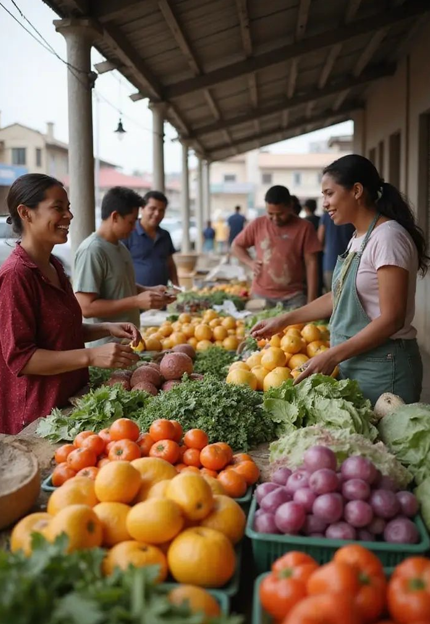
Imagine two customers buying the same basket of goods. The first customer shops online and orders imported fruits, packaged snacks from overseas, and clothes shipped from another continent. Within days, trucks, ships, and planes have moved those products across thousands of kilometers to reach their doorstep. The second customer visits a local farmer’s market, buys fresh vegetables grown nearby, chooses bread baked that morning, and purchases handmade products from a local vendor. Both customers buy what they need. But the environmental and economic impact of their choices is completely different. In a world driven by convenience and global supply chains, we rarely stop to consider how far our products travel — or where our money ultimately ends up. Buying local may seem like a small lifestyle choice, but in reality, it is one of the most practical and powerful ways to support sustainability and strengthen communities.
Meaning of buying local.
Buying local means purchasing goods and services produced within your community or region instead of importing them from far distances. This can include:
- Fresh produce from local farmers
- Clothes from local designers
- Furniture made by local carpenters
- Food from nearby restaurants
- Services from small businesses in your area
It’s not just about patriotism. It’s about sustainability.
Environmental Benefits of Buying Local.
1. Reduced Transportation Emissions
Imported goods often travel:
- Across countries
- Across continents
- By air, sea, and road
Every kilometer adds carbon emissions. When you buy local, products travel shorter distances, reducing fuel consumption and pollution.
2. Less Packaging Waste
Products shipped long distances usually require:
- Extra plastic wrapping
- Large protective boxes
- Multiple packaging layers
Local goods often use simpler, minimal packaging.
3. Fresher, Less Waste.
For food especially, buying local means:
- Shorter storage time
- Less refrigeration
- Lower chances of spoilage
Fresh products are less likely to be thrown away.
Economic Benefits for Communities
Buying local does more than protect the environment — it strengthens the economy.
1. Money Stays in the Community
When you support local businesses:
- They pay local workers
- Workers spend locally
- The local economy grows
- It creates a circular financial system within the community.
2. Job Creation
Small businesses are major employers in many communities. When local businesses grow:
- They hire more workers
- They expand operations
- They invest in better equipment
If local businesses struggle, job opportunities decrease. Buying local helps sustain employment opportunities for young people, families, and entrepreneurs. This reduces unemployment and strengthens financial stability within the region.
3. Encouraging Entrepreneurship
When people see local businesses succeed, they feel encouraged to start their own. This leads to:
- Innovation
- Healthy competition
- Economic diversification
Buying Local Encourages Responsible Production.
Large-scale production often focuses on speed and mass output. Local producers tend to:
- Pay closer attention to quality
- Use traditional or sustainable methods
- Produce smaller quantities
This often leads to more ethical and environmentally conscious production practices.
Financial Advantages for Consumers
Buying local can also benefit you financially:
- Better negotiation flexibility
- Fewer hidden shipping costs
- Reduced import taxes
- Stronger customer relationships
In many cases, local businesses offer personalized service that large corporations cannot match.
Building Community Connection.
Buying local builds relationships. You:
- Know the person selling to you
- Understand where your product comes from
- Build trust within your community
This creates social value beyond money.
This creates social value beyond money.
Small Habit, Big Impact.
Imagine if every household shifted just 20% of their spending toward local businesses. The result could be:
- Lower emissions
- Stronger community economies
- Increased job opportunities
- More sustainable production
Small purchasing decisions, when multiplied across thousands of people, create powerful change.
Challenges to Consider.
Of course, buying local is not always easy. Sometimes:
- Prices may be slightly higher
- Variety may be limited
- Convenience may be lower
But sustainability often requires intentional choices, not just convenient ones.
Conclusion.
In a world that moves quickly and prioritizes convenience, it is easy to overlook the deeper impact of our everyday decisions. Buying local may seem like a small action compared to global environmental policies or large corporate reforms, but real change often begins at the individual level.
Every product we purchase sends a message. It tells the market what we value, what we support, and what kind of system we want to grow. When we choose local businesses, we are not only buying a product — we are investing in our community, supporting livelihoods, and encouraging sustainable production practices.
Environmentally, buying local reduces transportation emissions, minimizes excessive packaging, and shortens supply chains. These changes may appear small at first, but when multiplied across thousands or millions of consumers, they significantly reduce carbon footprints and waste generation.
Economically, the benefits are equally powerful. Money spent locally circulates within the community, creating jobs, supporting entrepreneurship, and strengthening financial stability. Strong local economies are more resilient during economic downturns because they depend less on distant systems and more on internal support.
Buying local also builds something that cannot be measured purely in financial terms: connection. It strengthens relationships between producers and consumers. It creates trust, accountability, and a sense of shared responsibility. Communities that support one another economically often grow stronger socially as well. Of course, buying local may not always be the cheapest or most convenient option. But sustainability often requires intentional decisions rather than automatic ones. It requires asking thoughtful questions before making purchases and considering the long-term impact instead of just short-term comfort.